
2021
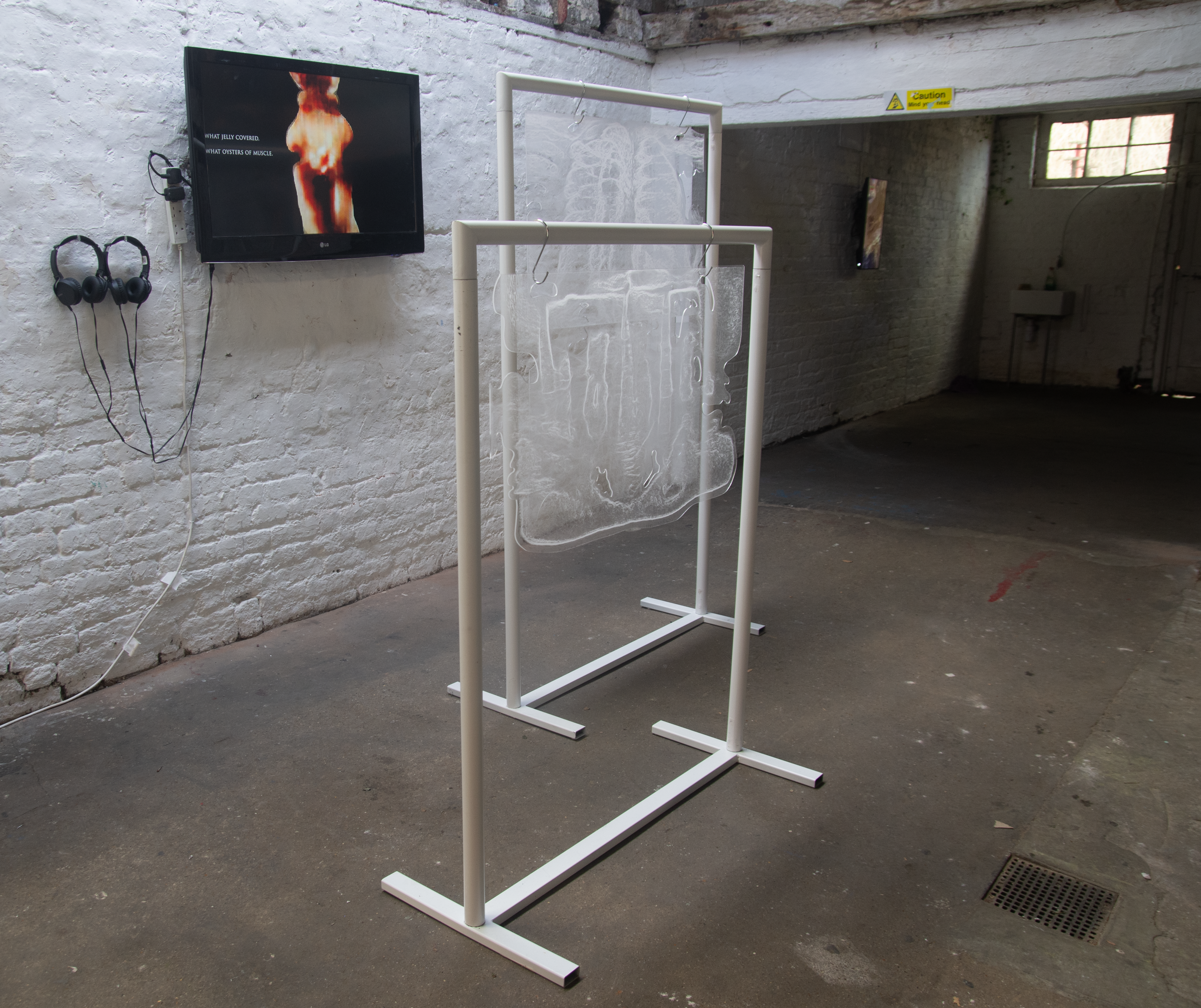
Digital video (8m), acrylic, steel
200cm x 500cm x 200cm
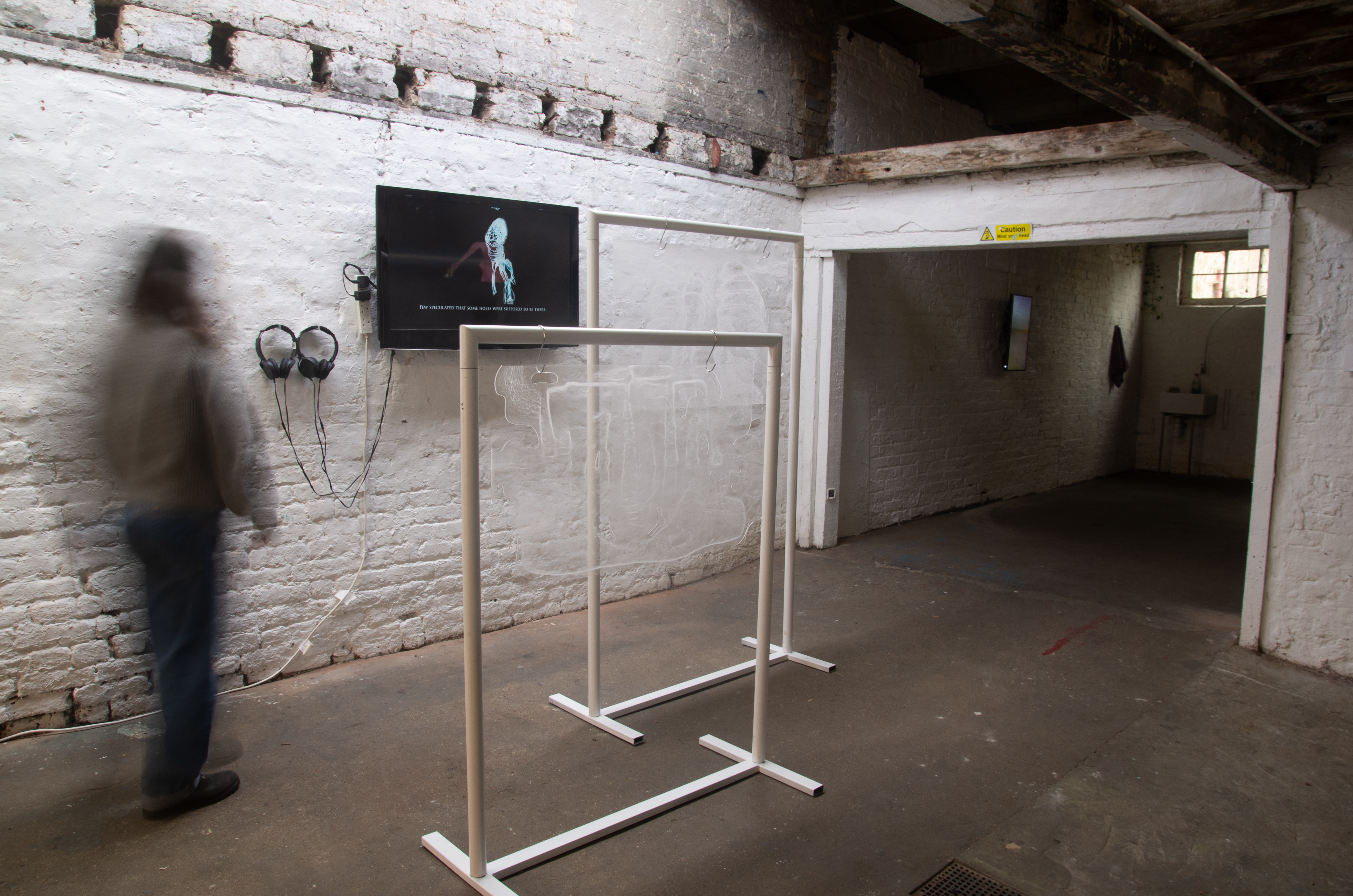
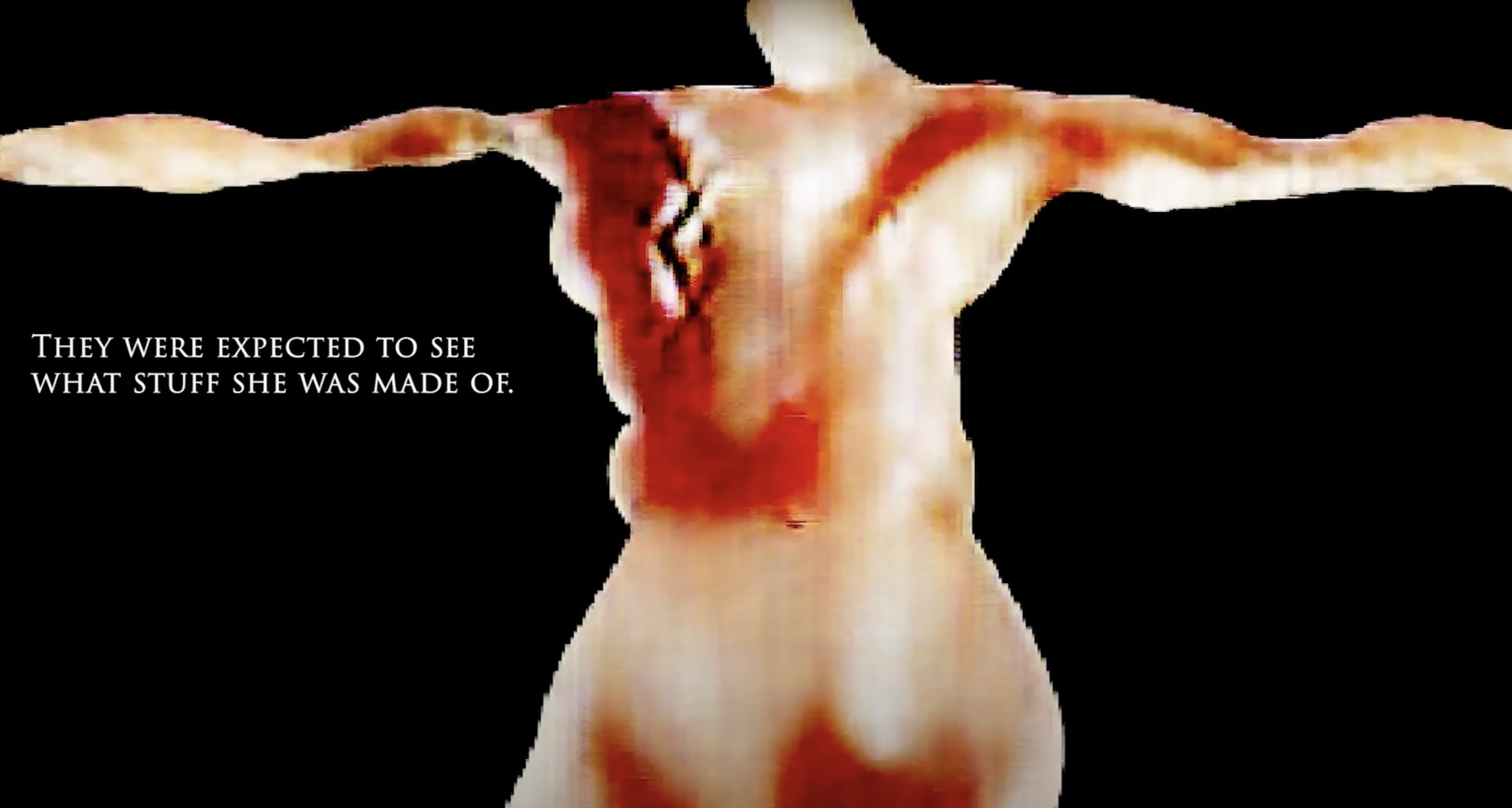
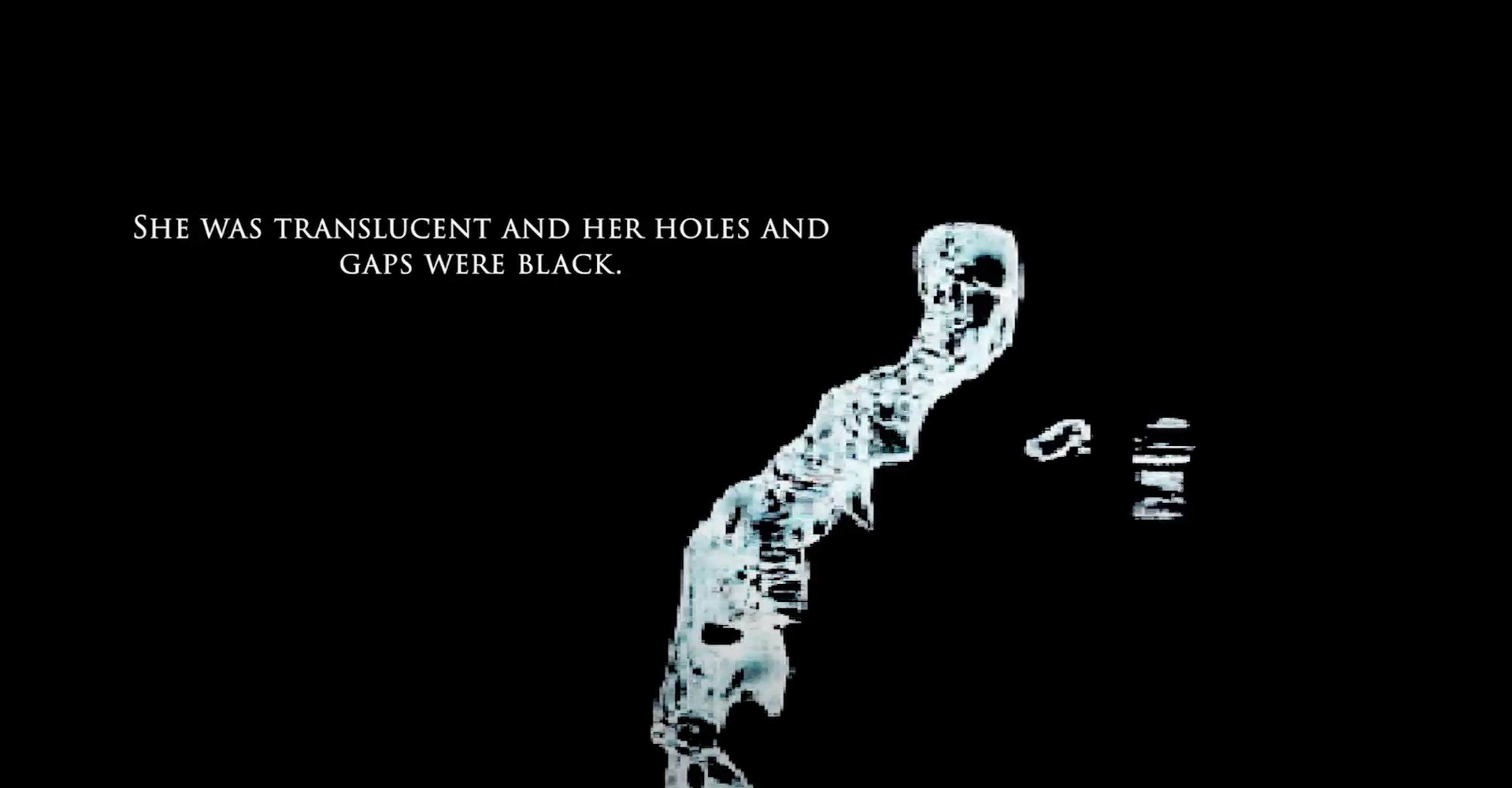
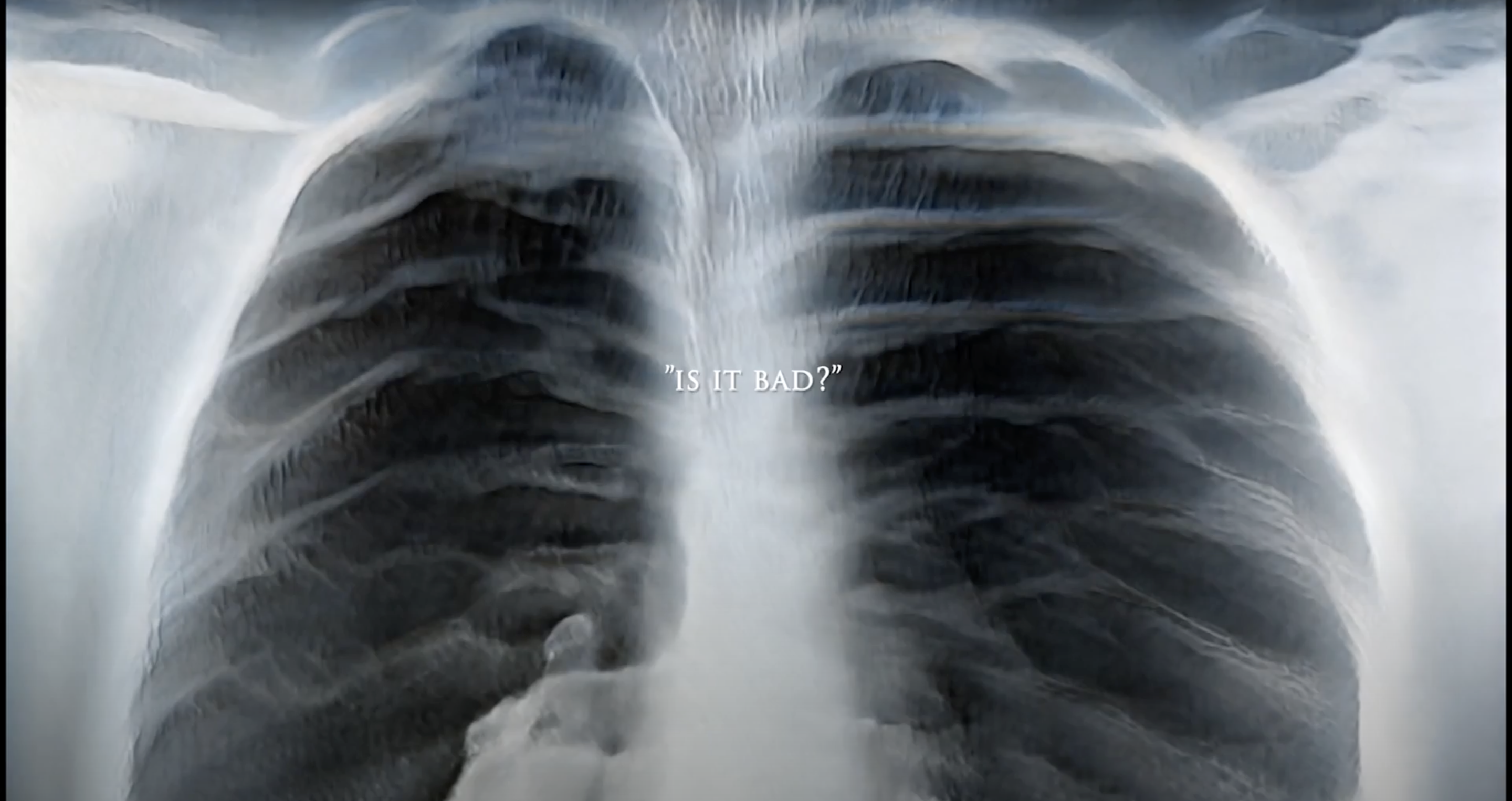
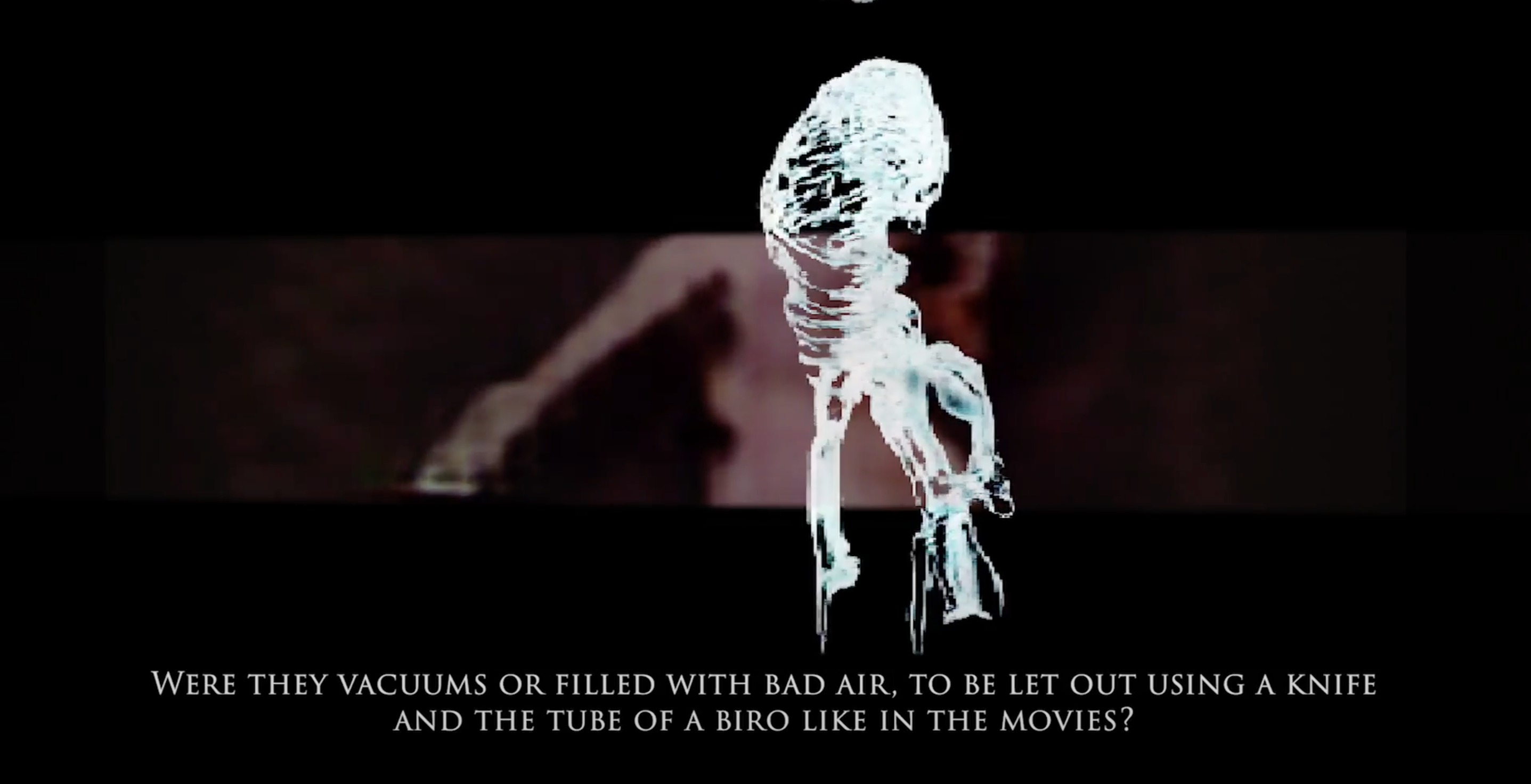
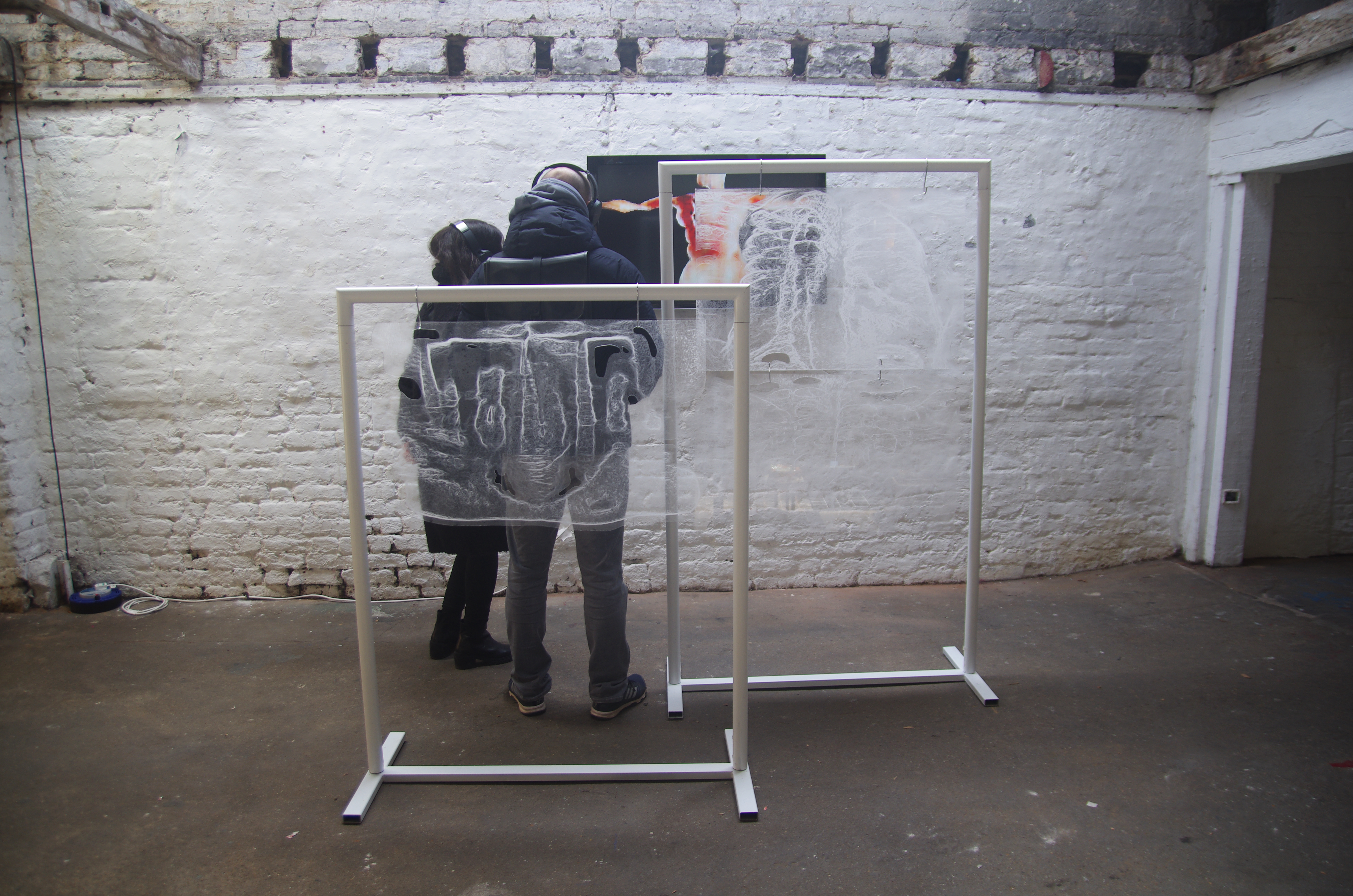
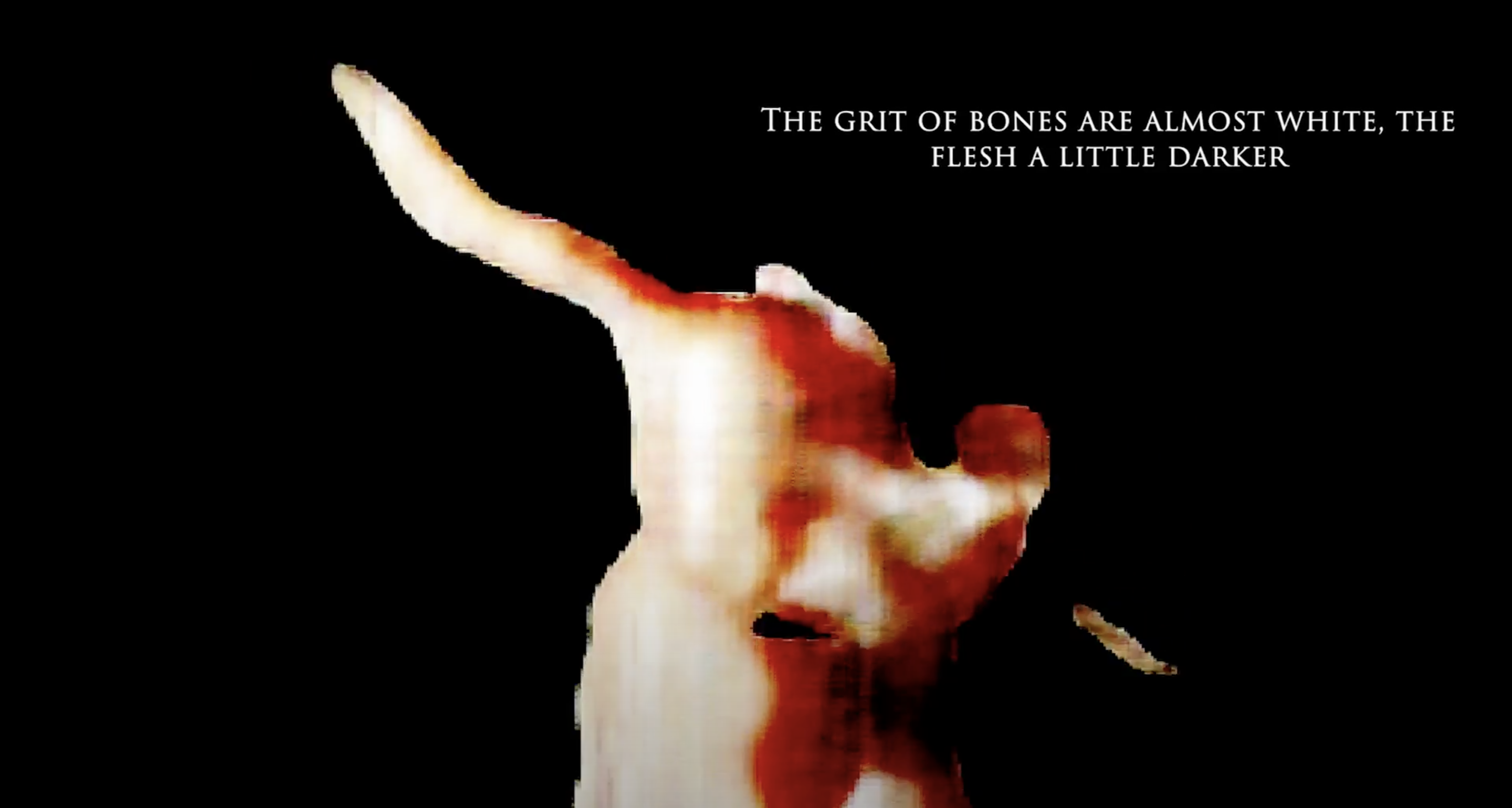
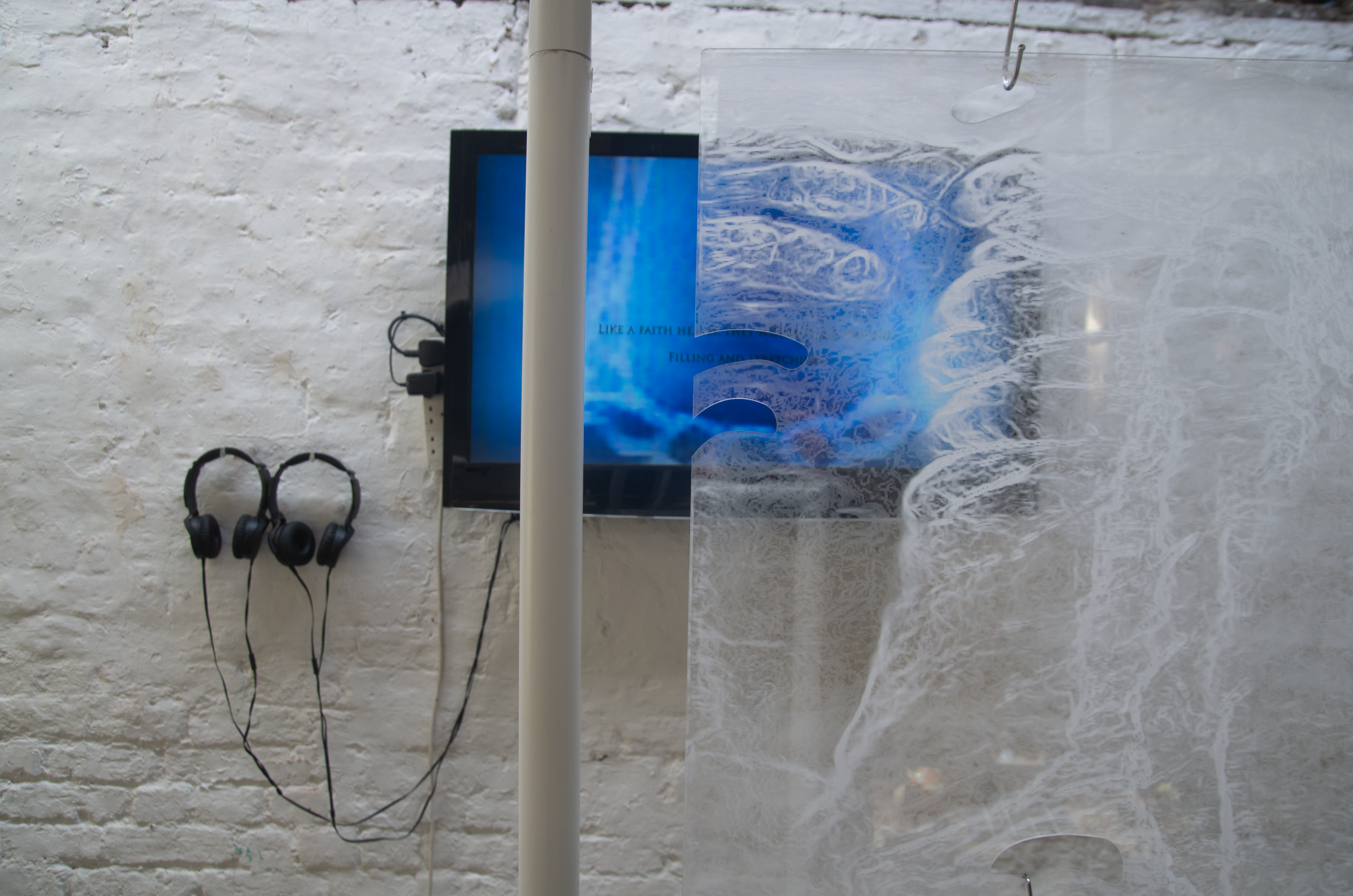
‘They were expected to see what stuff she was made of’ is an audio visual installation. The focal point of the piece is a screen showing a film played on a loop. The video is overlaid with text, the tone and narrative of which draws on tropes of gothic literature, specifically themes of distrust in medical advancements and sinister scientists. The text questions the fidelity of medical imaging, specifically x-rays, PET scans and MRIs, and considers the impartiality and objectivity of the images these technologies produce and what impact the images subsequently have on the body figured via these procedures. Accompanying the screen are two free standing steel frames. Within the frames, three acrylic panels are hung with laser etched patterns that suggest anatomical illustration – one panel looks like a rib cage, another could be a pelvis or a block of flesh.
Tindle used several machine learning algorithms to create the video and etchings, including StyleGan2 models based on X-rays scraped from google images, pix2pix models for which she created a virtual dataset using blender and three Fast Style Transfer models trained using medical images.
The video piece at the centre of the installation describes a fictionalised set of medical procedures. The film tells the story of an unknown woman who is undergoing an examination to see whether she has an illness which is not yet fully understood. The illness is causing holes and gaps to appear in the sufferers’ insides, progressing to the point where the body crumbles. Scientists are unsure of what causes the disease, whether it be environmental, moral, spiritual or caused by the procedure itself. Treatment is also debated and the full effects of the illness are not understood. This writing is the scaffolding around which the rest of the work is built, and functions as a way for me to critique the concept of a homogenous body, the language of illness and idea there can be universal truths on which to base treatment of the body. This piece acknowledges that medicine involves interpretation and to understand it to be absolute ignores the situatedness of healthcare as a practice. This denial of subjectivity in turn can work to marginalise those who have bodies which are not what is currently understood as average.


 Katie Tindle artist